
What is foam? A comprehensive guide to all types of foam, from cold foam to spray foam
Have you ever wondered what the modern world would be like without foams? From the comfortable furniture you rest on to the insulation of your home's walls and even your car's dashboard, they all depend on this amazing material. But what exactly is foam and what makes it so widely used and vital? In this comprehensive article, we will travel to the world of foams, learn about its different types such as cold foam, sealant foam and polyurethane spray foam and finally, we will examine the advanced production technology of this valuable material.
Foams are divided into different categories based on raw materials and production methods, each of which has its own characteristics and uses. Knowing types of foam will help you make the best choice for your needs.
What is cold foam and why is it popular in furniture?
Cold foam is a type of polyurethane foam whose production process is done at low temperature without using direct heat. This production method allows the molecules to form better and as a result, a foam with the following characteristics is obtained:
- Long life and durability: Due to its higher density, cold foam is more resistant to pressure and repeated use and does not easily lose its original shape. For this reason, it is considered the best option for sitting furniture, car seats and medical mattresses (compressed cloud for mattresses).
- Comfortable feeling and excellent resilience: This type of foam is very soft and flexible, and after the pressure is removed, it quickly returns to its original state.
- Waste reduction: The production process of cold foam is usually more efficient than hot foam.
- Unrivaled thermal insulation: By creating a seamless layer, this foam prevents heat exchange and significantly reduces energy consumption. This feature has made it the best wall thermal insulation foam.
- Polyurethane sound insulation: The closed cell structure in hard spray foam prevents the passage of sound waves and can be used to create an acoustic wall and quiet environments.
- Full sealing: Spray wall surface. Impermeable to moisture and air.
- Rigid Foam: These foams have a high density and are used for applications that require structural strength, such as the production of polyurethane refrigerator foam (as insulation for the body of the refrigerator) and the production of pseudo-wooden decorative parts. It is also compressed and used to produce hard mattresses and sports products.
Foam type, main use, key feature, cold foam, furniture, car seats, medical mattresses, high durability and excellent recovery, polyurethane spray foam, heat and sound insulation of walls and ceilings, creating a seamless layer sealant foam, filling cracks and seams, high adhesion and sealing hard foam, refrigerator insulation, decorative parts, strength and high density
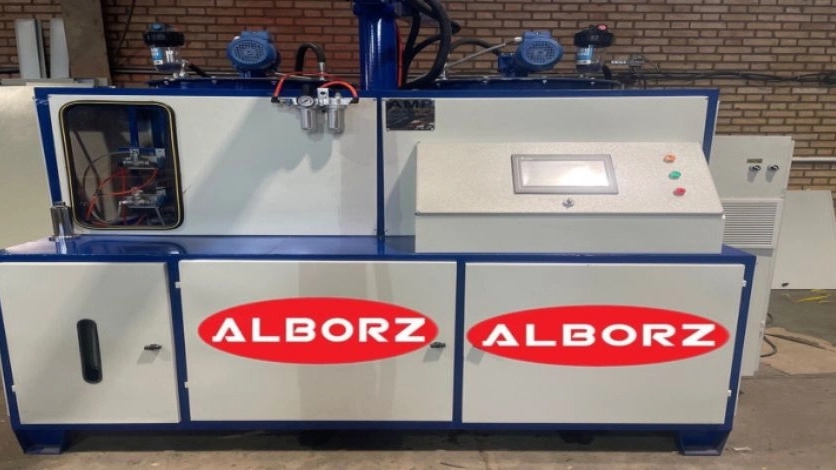
Polyurethane foam injection machine: the beating heart of the production line
Production of all these amazing products is not possible without advanced machinery. Polyurethane foam raw materials (isocyanate and polyol) must be combined with each other in a precise ratio and under controlled conditions so that the chemical reaction is carried out correctly. This task is the responsibility of the foam injection device.
Using PLC control system and HMI touch screen, these devices allow the operator to save and execute different injection programs with different weights and ratios. Double wall tanks, hot oil circulation system, European pumps and injection head with Italian technology, all guarantee accuracy, quality and repeatability in production.
Summary: From knowledge to production
In this article, we answered the key question of what is foam and found that this apparently simple material contains a world of technology and engineering. From types of foam such as cold foam which brings comfort to our homes to polyurethane spray foam which as a unique foam insulation provides thermal and acoustic comfort, they all play an important role in our daily lives. Understanding these applications and the technology behind their production is the first step to entering this profitable industry.
1- What is the main difference between cold foam and hot foam?
The main difference is in the temperature of the production process. Cold foam is produced at a low temperature, which results in greater durability and flexibility, while hot foam is baked in an oven at high temperatures and is usually stiffer and less durable.
3- What is the most important advantage of low pressure (low pressure) foam injection machine?
The most important advantages are more reasonable price, lower maintenance cost, and high adaptability to produce a wide range of polyurethane foam products (from soft to hard) compared to hypershear (high pressure) machines.
4- What are the main raw materials for the production of polyurethane foam?
The two main materials are polyol and isocyanate, which react with each other in the presence of catalysts and other additives and form foam.
- External linking: The following links are recommended as reliable sources for further reading.
- https://en.wikipedia.org/wiki/Polyurethane
- https://www.americanchemistry.com/industry-groups-and-initiatives/polyurethanes
- https://alborzmashinpasargad.com